
The karat number on a piece of jewellery tells you how much of it is pure gold. Pure gold is divided into 24 parts, so 24 karat means 24 parts out of 24 are gold. Lower karats are mixed with other metals — such as silver, copper and zinc — to change colour and add strength.

Quick comparison
| Karat | Gold content | Hallmark | Best for |
|---|---|---|---|
| 24K | 99.9% | 999 | Bullion bars, coins, simple pieces |
| Thai gold | 96.5% | 965 | Thai chains and bangles |
| 22K | 91.6% | 916 | Traditional Turkish, Middle Eastern and Asian jewellery |
| 18K | 75% | 750 | Diamond and gemstone settings, fine jewellery |
| 14K | 58.5% | 585 | Everyday wear, lightweight designs |
Colour
The higher the karat, the deeper and warmer the yellow. 18K and 14K gold can also be made in white or rose by changing the alloy metals.
Durability
Pure gold is soft. 24K is ideal for investment bars but can bend or scratch as jewellery. 18K offers a good balance for rings that hold stones securely, while 14K is the toughest of the four for daily wear.
Price
Gold value rises with purity, so a 22K bangle is worth more than a 14K bangle of the same weight. Remember that jewellery prices also include design and labour.
How to choose
- Investment: 24K bars or coins.
- Traditional gifts and savings: Thai 96.5% or 22K.
- Engagement rings: 18K.
- Everyday active wear: 14K or 18K.
Not sure which purity is right for you? Ask us for a quote and tell us how you’ll wear it, or browse by category.
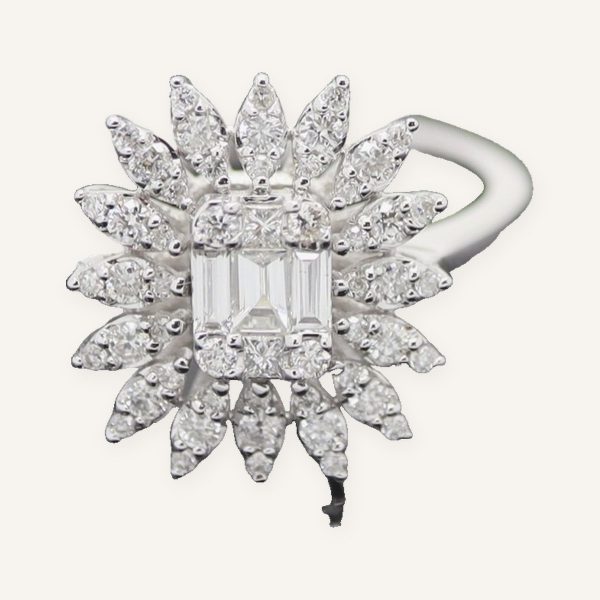 Ring RG2127
 Ring RG3023
 Earrings ER2097


